to Choreograph a Multi-Artist Fire Show
Few live performances can match the visceral excitement and breathtaking beauty of a well-orchestrated fire show. When multiple fire artists perform together, the stakes—and the rewards—are even higher. But how does one turn a group of skilled fire performers into a seamless, synchronized spectacle? Let’s explore the key steps and strategies behind effective fire show choreography in a multi-artist environment, whether you’re planning a city festival, corporate gala, or public celebration.
The Foundation: Planning and Safety First
A successful fire show starts with two non-negotiable factors: meticulous planning and stringent safety protocols. Without these, artistic vision can quickly turn into dangerous disorder.
Establish Safety Standards
According to the National Fire Protection Association (NFPA), public performances involving fire must comply with a detailed safety code (NFPA 160). For group performances:
- Designate at least one safety officer per three performers.
- Ensure all artists are trained in extinguishing techniques and emergency response.
- Use fire-resistant costumes and clearly mark safety zones.
Collaborating with fire marshals during planning gives your event a legal and safety advantage.
Site Mapping and Rehearsal Scheduling
Choose a venue with sufficient space for individual artist movement and group formations. Map out:
- Performer paths, exits, and entry points
- A clear barrier between audience and stage space
- Fuel station placements and safe zones
Start rehearsals weeks in advance, gradually moving from dry runs to full fire rehearsals. This allows performers to internalize their choreography and timing in both safe and realistic conditions.
Crafting the Visual Flow: Choreography Techniques for Group Fire Shows
Multi-artist fire shows are not just coordinated movement—they are structured narratives told through heat and motion. Your fire show choreography must be both visually impactful and technically feasible.
Use Visual Rhythms and Patterns
Take cues from music festivals and theatrical productions. Consider formations and rhythmic cues such as:
- Symmetrical patterns: For impact and harmony (e.g., two lines converging).
- Canons: Sequential movements across the group for dynamic visual effect.
- Mirroring: Half of the group recreates the other’s motion symmetrically.
- Spotlight moments: Assign solo highlights while others freeze or create ambiance with slow spins or hardware light shows.
“A balanced fire group routine should alternate between collective synchronicity and spotlight individuality to sustain audience focus.” — Hestia Fire Dance Performance Manual
Integrate Props Strategically
Different props can dramatically diversify the performance. Assign tools based on performer strengths and routine requirements:
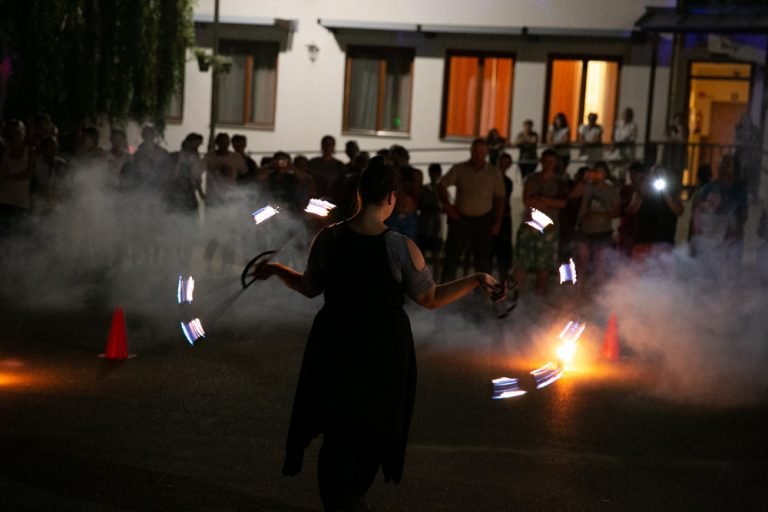
- Fire poi and double staff: Ideal for rhythm-intensive sections.
- Fire fans and palm torches: Create emotive sequences and low-risk transitions.
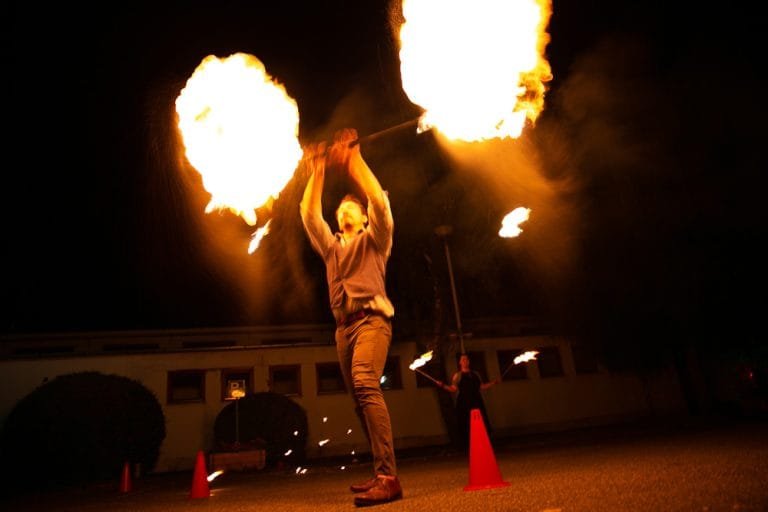
- Fire whips and dragon staff: Use sparingly for climactic visual impact.
Limit prop transitions in live segment sequences and ensure enough visual contrast between simultaneous acts on stage.
Harnessing Music for Group Synchronization
Music is the glue that binds coordinated motion. Choose music that matches the length, tone, and intensity of your show. Use digital editing tools to label musical segments, beats, and cue points.
Choreograph to Cues, Not Just Time
Instead of timing all transitions to exact minutes and seconds, base movements on musical or atmospheric cues:
- Drop — Cue for fire-breathing ensemble spin
- Bass fade — Transition to slow-motion baton juggling
- Tempo shift — Cast spotlight to solo fire hoop artist
Using cue-based choreography allows more flexibility when cues are adapted for live events with varying performance conditions.
Communication and Roles During Live Performance
Even with perfect rehearsal, real-time communication ensures performers stick to the plan while remaining adaptable to any issues.
Assign Roles Clearly
Each team member should have clearly defined roles:
- Fire Safety Lead: Monitors all fuel use, holds extinguisher, and communicates via headset.
- Stage Manager: Coordinates on-stage transitions and timing with music operator.
- Cue Captains: One or two performers who lead group motions, especially in synchronized sections.
“Success in group work hinges on trust and clarity—every performer must know when to lead, follow, and support.” — Fire Arts Event Symposium, 2023
Post-Show Review and Iteration
After the show ends, your job isn’t over. Debrief with your team to identify any challenges or mishaps, and gather audience feedback if possible. Document setlists, cues, and challenges in a “Show Bible” for future reference.
Conclusion: Sparking Collective Brilliance
Designing a multi-artist fire show is an extraordinary blend of artistic direction, logistical precision, and synchronized teamwork. When thoughtful fire show choreography meets cooperative group work, the result is a spectacle audiences will remember for years.
If you’re ready to bring a fully integrated group fire show to your event, our expert performers are here to help. Learn how we customize and choreograph extraordinary fire dance shows to fit your unique space, budget, and vision.
Book a fire show with us today and light up your event with synchronized brilliance.
Quick Summary
- Prioritize safety: Assign safety roles and rehearse with full fire conditions.
- Use ensemble choreography: Plan patterns, formations, and phasing movements.
- Leverage music cues: Tie choreographed segments to musical cues, not only timestamps.
- Assign roles clearly: Define responsibilities among performers for smooth execution.
- Iterate post-performance: Review and document lessons for future shows.